

19th Annual Conference on Autism: Research-Based Solutions
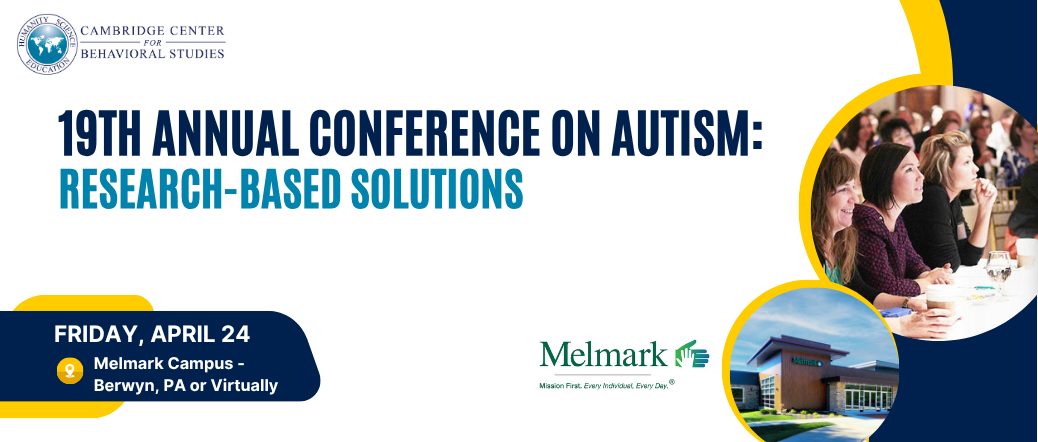
Register for this one-day conference featuring leading experts in fields of Science, Special Education, and Autism Spectrum Disorders.
Friday, April 24, 2026 – 9:00 am – 5:15 pm (Eastern Timezone) Get Schedule
Register for in-person or virtual attendance. Recordings will be available for 14 days post-conference*.
*NOTE that the rules for attendance verification for any asynchronous/home study through recordings have changed. For BACB Learning CEUs, there is a 3 question quiz for each presentation that needs to be passed. And we no longer offer Psychology CE Credits through asynchronous/home study. Psychology CE Credits are only available through live/synchronous learning. (For those seeking Psychology CE Credits, study is to be completed during live/synchronous attendance. Review Continuing Education Opportunities below.
Of benefit to Behavior Analysts, Psychologists, Teachers, Speech-Language Pathologists, Special Education Providers, School Administrators, Students and Parents & Caregivers
Recordings will be available for 14-days post-conference for home-study for those seeking BACB Learning CEUs.
Call for Student Posters! Learn More!
Groups of five (5) or more coming in-person from one organization/team are offered a discount. (See pricing in registration in our store.) If you have a group of 20 or more for in-person or virtual, please contact pa****@******or.org.
Invited Speakers
Jonathan Schmidt, PhD, BCBA-D: Integrating Treatment Components and Tactics for Reducing Self-Injurious Behavior and Self-Restraint
Affiliation:
Licensed Psychologist
Program Director, Neurobehavioral Unit – Inpatient
Assistant Professor, Johns Hopkins University School of Medicine
Integrating Treatment Components and Tactics for Reducing Self-Injurious Behavior and Self-Restraint
Abstract:
Identifying treatment-resistant subtypes of automatically maintained self-injurious behavior (SIB) has been essential in guiding the development of more effective interventions. Advances in understanding the mechanisms underlying SIB and self-restraint, along with emerging technologies, provides a strong foundation for targeted treatment approaches. Individuals with Subtypes 2 and 3 are more likely to be resistant to commonly effective interventions for Subtype 1, necessitating additional tactics to achieve meaningful behavior reduction. In this presentation, initial findings are presented from a sample of individuals admitted to an inpatient hospital unit, enrolled in a clinical trial evaluating the efficacy of a combination treatment for treatment-resistant subtypes of automatically maintained SIB. These cases illustrate a treatment development approach that emphasizes pre-treatment assessments and training procedures prior to formal intervention. Specific assessments are conducted to (a) systematically identify effective components to ensure safety (protective procedures) and alternative sources of competing reinforcement and responses, (b) implement intensive training to establish prerequisite skills to maximize effects, and (c) pilot various combinations of treatment components to identify optimal arrangements. After these assessments, components are applied in a combination treatment package targeting SIB and when relevant self-restraint. Treatment is then generalized to increase feasibility of implementation in other settings, and when possible, protective procedures are systematically faded. Outcomes presented for participants are quantified in terms of reductions in SIB, self-restraint, and the level of protective procedures required to ensure safety and functioning in daily life, with an emphasis on increased independence at the individual level.
Learning Objectives:
At the conclusion of this presentation, participants will be able to:
- Identify factors relevant to the selection of treatment components for subtypes of automatically maintained self-injurious behavior.
- Describe how the competing stimulus assessment can be augmented to identify and establish competing stimuli, tasks, and alternative self-restraint items.
- Detail how findings from pretreatment assessments can be combined to maximize treatment effects on automatically maintained self-injurious behavior and when relevant, self-restraint.
Biography:
Dr. Jonathan Schmidt is the Program Director of the Neurobehavioral Unit Inpatient Program at the Kennedy Krieger Institute, and an Assistant Professor of Psychiatry and Behavioral Sciences at the Johns Hopkins University School of Medicine. During his 20 plus years in the field, he has been involved in a variety of clinical, research, training, and advocacy efforts for individuals with intellectual and developmental disabilities who exhibit severe challenging behavior, their families, and the staff that work with them.
Dr. Schmidt earned his doctoral degree in school psychology from the University of South Carolina in 2010. Following his coursework, he completed an internship at The May Institute and a postdoctoral fellowship at the Kennedy Krieger Institute and the Johns Hopkins University School of Medicine. During both his internship and fellowship, he focused on neuropsychological assessment and the assessment and treatment of challenging behavior in individuals with intellectual and developmental disabilities.
Dr. Schmidt’s research is closely aligned with his clinical work, reflecting a scientist-practitioner approach. His interests center on the assessment and treatment of severe challenging behavior, innovations to traditional behavioral assessment methods, and the development of functional communication skills. Dr. Schmidt has focused more intensively over the past decade on identifying effective treatments for individuals with automatically maintained self-injurious behavior, based on the subtype. He regularly publishes in peer‑reviewed journals and presents his work at professional conferences.
Matt Tincani, PhD, BCBA-D: Neurodiversity, Neurodivergence, and Applied Behavior Analysis
Affiliation:
Professor, Special Education and Applied Behavior Analysis
College of Education and Human Development
Temple University
Neurodiversity, Neurodivergence, and Applied Behavior Analysis
Abstract:
Neurodiversity (ND) is based on ideas that human development varies and people with autism, attention deficit hyperactivity disorder, learning disabilities, or other conditions experience the world differently but not incorrectly. Critics from the ND community allege that ABA seeks to normalize autistic people at the expense of their identities and some in the ABA field have amplified these concerns. Other ABA advocates have countered that such criticisms are grounded in misconceptions, in not outright falsehoods about ABA, or are based in practices that were abandoned decades ago. In this presentation I will provide a firsthand account on the positive role of neurodivergence in the perception of disability and potential contributions of the ND perspective in ABA. I will then outline limitations of the ND perspective, emphasizing the central importance of science and scientific norms in the design of humanistic and effective ABA programs. I will conclude with recommendations for practices that respect the ND perspective while adhering to an evidence-based ABA framework.
Learning Objectives:
At the conclusion of this presentation, participants will be able to:
- Define neurodiversity (ND) and neurodivergence and outline the history of these concepts in the disability community.
- Describe the contributions of neurodivergent people to understanding conditions such as autism and ADHD.
- Identify common misconceptions about ABA and limitations of the ND perspective.
Biography:
Matt Tincani, PhD, BCBA-D focuses on the application of behavioral principles to improve outcomes for people with disabilities and other special learning needs. His interests include systematic reviews of behavior science research, teaching job-related skills to neurodivergent people, smart technologies to improve special education, single-case designs, meta science, and open science. His recent work has explored questionable and improved research practices in single-case designs. He currently serves on the editorial boards of the Journal of Positive Behavior Interventions, the Journal of Special Education Technology, and Focus on Autism and Other Developmental Disabilities, and as consulting editor to Education and Training in Developmental Disabilities. He has also served in several prominent regional and national leadership roles, including as Appointee to the Nevada Governor’s Councils on Development Disabilities and Autism, and as founding president of the Positive Behavior Support SIG of the Association for Behavior Analysis International. He has published over 85 scholarly publications, including the books Classroom Management and Positive Behavior Support (2nd edition; Routledge) and Adults with Autism Spectrum Disorders, Evidence-Based and Promising Practices (Guildford Press). He is currently co-principal investigator of a $2.3 million NSF-funded research project to explore support for people with neurodevelopmental disorders in attaining employment in information technology fields.
Keith E. Williams, PhD, BCBA: Helping Persons on the Spectrum Expand Their Diets: Thirty Years of Lessons Hard Learned
Affiliation:
Director, Penn State Health Children’s Hospital Feeding Program and
Professor of Pediatrics, Penn State College of Medicine
Helping Persons on the Spectrum Expand Their Diets: Thirty Years of Lessons Hard Learned
Abstract:
While the prevalence of autism in the general population is often estimated to be 1 in 31, in populations who have problems with oral intake, it is much higher. In two separate samples of children seen at our feeding clinic, 1 in 3 children were on the spectrum. A recent review examined the prevalence of autism spectrum in eight samples of eating disordered patients found it averaged 1 in 5. To address the feeding and eating challenges of persons on the spectrum, clinicians have utilized behavioral interventions which are described in a growing number of studies. This talk will discuss the development of the behavioral feeding intervention literature, its limitations, and how behavioral interventions can be expanded, modified, and possibly, reconceptualized, to increase their effectiveness.
Learning Objectives:
At the conclusion of this presentation, participants will be able to:
- Explain the role of repeated taste exposure is the development of food preferences.
- Describe three factors relevant to the selection of a feeding intervention.
- Describe three possible adverse outcomes that can result from a chronic feeding problem.
Biography:
Dr. Williams is the Director of the Penn State Health Children’s Hospital Feeding Program. He is an Associate Professor of Pediatrics at the Penn State College of Medicine. Prior to coming to Hershey, Dr. Williams was a faculty member in the Kennedy Krieger Institute’s Pediatric Feeding Disorders Program. He specializes in the behavioral treatment of feeding disorders. Dr. Williams also treats a wide array of behavior problems found among children with developmental disabilities. He is licensed as a psychologist in Maryland and Pennsylvania and is also a board Certified Behavior Analyst.
Helena Maguire, MS, LABA, BCBA, CDE® and Jill Harper, PhD, BCBA-D, LABA, CDE®: From Framework to Fidelity: Building Effective BCBA Supervision Systems in Applied Settings
Affiliations:
Helena Maguire, MS, LABA, BCBA, CDE®
Vice President and Chief Clinical Officer
Melmark New England at Melmark Inc.
Jill Harper, PhD, BCBA-D, LABA, CDE®
Senior Director
Professional Development, Clinical Training, and Research
Melmark New England
From Framework to Fidelity: Building Effective BCBA Supervision Systems in Applied Settings
Abstract:
Establishing a sustainable and effective supervision system is essential for developing competent, ethical behavior analysts. This presentation will provide a practical framework for designing supervision systems that align with BACB standards (BACB, 2025) while meeting the operational demands of applied settings. Drawing from organizational behavior management (OBM) principles (Daniel & Bailey, 2014) and current supervision research (Kranak et, al., 2023), presenters will outline supervision infrastructure, including supervisor training, documentation systems, and competency-based performance evaluation. Topics will include structuring supervision to meet BACB requirements (BACB, 2025), integrating competency-based training, and interdepartmental collaboration to enhance supervision quality. Presenters will provide strategies for integrating supervision into existing clinical workflows, using data to monitor progress, and fostering a culture of feedback and professional growth. Case examples will illustrate how these systems can successfully be applied in residential and educational settings, resulting in improved trainee outcomes and organizational efficiency.
Learning Objectives:
At the conclusion of this presentation, participants will be able to:
-
Identify key components of a sustainable BCBA supervision system to align with BACB standards and ethical guidelines.
-
Summarize a framework for supervisor training that ensures consistency and competency across applied settings.
-
Discuss two strategies for integrating supervision into existing clinical workflows without disrupting service delivery.
Biographies:
Helena Maguire, MS, LABA, BCBA, CDE®, serves as the Vice President and Chief Clinical Officer of Melmark. She oversees the development and implementation of programs and services, as well as the daily operations for Melmark New England. She develops strategic objectives for the Massachusetts division, and provides leadership to direct reports in order to assure the achievement of these objectives. Mrs. Maguire supports the CEO through various committees and activities, and assumes responsibility for policy development, quality assurance, risk management, regulatory compliance, fiscal integrity, and excellence in care and delivery of all services.
Mrs. Maguire has worked extensively in the field of community based human service delivery systems in Massachusetts. She has served as a Program Director at Vinfen Corporation and as the Director of Adult Services at the May Institute. In both of these positions, Mrs. Maguire was responsible for the development and implementation of the staff orientation training curriculum, training for supervisory personnel and in-service training for all staff. Mrs. Maguire has presented numerous papers on staff management and staff training techniques, both at the local level and at the national level.
Mrs. Maguire is an Adjunct Professor at Endicott College and the University of Massachusetts-Boston and is an instructor for a five-course graduate series on Applied Behavior Analysis.
She earned her Master of Science in Human Services Administration degree from the University of Massachusetts-Boston. She earned her Board Certification in Behavior Analysis (BCBA) in May 2002.
Jill Harper, PhD, BCBA-D, LABA, CDE®, serves as the Senior Director of Professional Development, Clinical Training, and Research at Melmark New England. Dr. Harper received her PhD. in Psychology with a concentration in Behavior Analysis from the University of Florida. She is a Board Certified Behavior Analyst, Licensed Behavior Analyst with the State of Massachusetts, and a Certified Diversity Executive®. Dr. Harper received the 2013 Jerry Shook Practitioner Award from BABAT, Massachusetts’ professional organization for behavior analysts, for excellence in clinical practice. In addition to direct service, she has been actively involved in the field of behavior analysis through academic instruction, training and supervision of staff, as well as the design and dissemination of applied research. Dr. Harper holds an adjunct faculty position teaching and mentoring masters and doctorate level students through Endicott College. Her research interests include the assessment and treatment of severe behavior disorders, mechanisms responsible for behavior change, and maintenance and generalization of treatment effects. Dr. Harper has published her work in several peer-reviewed journals and regularly presents as regional and national conferences.
Amanda Duffy, M.Ed., BCBA, LBS; Kristina Gasiewski, MOTR/L, M.Ed., BCBA; and Lara Redcay, MEd, BCBA: Advocating for Empowerment: Navigating End of Life Care for the Autistic Population
Affiliations:
Amanda Duffy, MEd, BCBA, LBS
Director of Clinical Services – Adult Programs
Melmark
Kristina Gasiewski, MOTR/L, MEd, BCBA
Behavior Analyst/QIDP Adult Clinical Services
Melmark
Lara Redcay, MEd, BCBA
Assistant Director of ICF/IDD
Melmark
Advocating for Empowerment: Navigating End of Life Care for the Autistic Population
Abstract:
In this presentation, the authors will address the unique challenges and considerations of planning for and providing end-of-life care to the aging autistic community. Utilizing an interdisciplinary approach that incorporates a behavior analytical framework will contribute to proactive, effective and compassionate care. Planning and having conversations with loved ones and/or stakeholders while a person is healthy is more beneficial; however, the immediate pressures of caring for a person with complex needs often allows for limited focus on the future. Additionally, coordinating with outside providers is often a crucial component to advocating for and ensuring the voice of the individual and their loved ones is prioritized. This talk will assist providers and supporters of individuals served in identifying and addressing end-of-life care planning needs to allow for necessary resources to be solely allocated to caring for the individuals in their final days.
Learning Objectives:
At the conclusion of this presentation, participants will be able to:
- Identify relevant team members to ensure appropriate roles and responsibilities are allocated to contribute to proactive, effective and compassionate care of the individual.
- Describe the role of the behavior analyst in end-of-life planning, care and potential behavior support needs.
- Learn strategies to develop and implement formalized planning procedures as a core component of adult programming.
Biographies:
Amanda Duffy, MEd, BCBA, LBS, received her Bachelor’s degree in Communicative Disorders from West Chester University in Pennsylvania. She then pursued a Master of Education with a focus in Applied Behavior Analysis from the University of Massachusetts, Boston. Amanda has worked in various roles and settings including providing school-based services as well as overseeing community-based programming for adult populations. Currently, Amanda clinically oversees Melmark Pennsylvania’s adult day and residential programs. Areas of focus include consultation across the lifespan in an effort to support a continuum of care, particularly the challenges and changes of an aging population with unique needs.
Kristina Gasiewski, MOTR/L, MEd, BCBA, is a rare blend of two worlds, an Occupational Therapist and a Board Certified Behavior Analyst, who has spent more than 15 years supporting individuals with autism and intellectual/developmental disabilities. She earned her MOT in Occupational Therapy from the University of the Sciences in Philadelphia and her M.Ed. in Autism and Applied Behavior Analysis from Endicott College. Her career has spanned school districts, private programs, and now her role as a Behavior Analyst and QIDP in Melmark’s Adult ICF/ID program, where she designs, oversees, and coordinates active treatment and clinical programs. Kristina is a passionate advocate for collaboration across disciplines, evidence-based practice, and enhancing quality of life across the lifespan. She is a published author in Behavior Analysis in Practice, Autism Spectrum News, and Science in Autism Treatment. Additionally, Kristina is a Board member of the Association for Science in Autism Treatment (ASAT). She’s also a frequent presenter and has presented at conferences such as Association for Behavior Analysis International (ABAI), the American Occupational Therapy Association (AOTA), and the Profound Autism Summit. Outside of her professional life, Kristina finds joy in the simple things like unwinding by the campfire with her family and hanging out with her dog, Swift, who reminds her daily of the importance of play, presence, and the occasional muddy adventure.
Lara Redcay, MEd, BCBA, received her Bachelor of Arts in Child and Family Studies from Albright College in Reading, PA and her Master of Education in Applied Behavior Analysis and Autism from Endicott College in Beverly, MA. She has worked in a residential setting with both children and adults, spending the last 12 years working with adults with intellectual disabilities and autism. Lara joined Melmark PA in 2013 as a direct care staff, transitioning into a behavior specialist role in 2016 working with adults within the 6400, 2380, & 6600 regulations. She moved into a leadership position as an Assistant Director of the ICF, supporting with operational and clinical programming for adults who live residentially on Melmark’s campus and community programs. Her research interests include individuals with intellectual disabilities and autism, and quality of life for individuals with intellectual abilities and ensuring individuals are able to experience a “good death”. Lara is a member of the Pennsylvania Association for Behavior Analysis (PennABA) and Berkshire Association for Behavior Analysis and Therapy (BABAT).
Invited Speaker Panel with Moderator Mary Jane Weiss, PhD, BCBA-D, LABA: Autism Intervention: Lessons, Challenges, and Opportunities
Mary Jane Weiss, PhD, BCBA-D, LABA, Moderator
Dean of the Institute for Applied Behavioral Science
Director, PhD Program in Applied Behavior Analysis
Endicott College
Invited Speaker Panel: Autism Intervention: Lessons, Challenges, and Opportunities
Abstract:
In this panel, the presenters will respond to questions about the state of autism intervention, the challenges currently being experienced by individuals with autism, their caregivers, and their service providers, and the opportunities that exist to build effective services and improve the quality of life for service recipients.
Learning Objectives:
At the conclusion of this presentation, participants will be able to:
-
Identify some challenges for autism intervention associated with complex needs.
-
Identify elements of care that reflect attention to quality of life.
-
Define and describe neurodiversity as well as recent dialogue on this topic.
Moderator Bio:
Mary Jane Weiss, PhD, BCBA-D, LABA, is the Dean of the Institute for Applied Behavioral Science and is Director of the Ph.D. Program in ABA at Endicott College, where she has been for 11 years. She also works with the research and training teams at Melmark. She has worked in the field of ABA and Autism for over 35 years. She received her Ph.D. in Clinical Psychology from Rutgers University in 1990 and she became a Board Certified Behavior Analyst in 2000. She previously worked for 16 years at the Douglass Developmental Disabilities Center at Rutgers University. Her clinical and research interests center on defining best practice ABA techniques, integrating compassionate care and cultural responsiveness into ABA service delivery, exploring ways to enhance the ethical conduct of practitioners, training staff to be optimally effective at instruction and at collaboration, and maximizing family members’ expertise and adaptation. She serves on the Scientific Council of the Organization for Autism Research, is on the board of Association for Science in Autism Treatment, is a regular contributor to the ABA Ethics Hotline, is on the editorial board of Behavior Analysis in Practice, and is a Trustee of the Cambridge Center for Behavioral Studies. She is a regular presenter at national and international conferences and is a frequent member of service committees for a variety of organizations.
Continuing Education Opportunities
Continuing Education opportunities:
BACB® Learning CEUs and Psychology CE Credits (Includes Licensed psychologists, school psychologists, and EdDs/educational psychologists)
This is a hybrid in-person and virtual conference. Recordings will be available for 14 days. (For those seeking Psychology CE Credits, ONLY live/synchronous study is available.)

BACB® Learning CEUs (6.0 Anticipated): The Cambridge Center for Behavioral Studies is an approved Type 2 CE Provider by the Behavior Analyst Certification Board® (BACB®) and is authorized to offer 6.0 CE units for this conference. Continuing Education Provider No.: OP-04-0058
Attendees must complete all six presentations in-person, virtually or through recordings available for 14 days post-conference for asynchronous home-study* to earn CEs. (Partial credit will not be issued.) An evaluation and code quiz with a 100% score needs to be completed for issuance of continuing education for live/synchronous study by the Monday following the conference. *IF you are seeking to earn BACB® Learning CEUs through watching recordings, you will need to complete a different process, including a question/answer quiz with 3 questions for each presentation. This is a new regulation.

APA Approved Sponsor
Psychology CE Credits (6.0 Anticipated)*: Amego Prepare is a co-sponsor of this conference for Continuing Education Credits for Psychologists. Amego Prepare is approved by the American Psychological Association to sponsor continuing education for psychologists. Amego Prepare maintains responsibility for this program and its content.
In case of a complaint, about Psychology CE Credits, contact Amergo Prepare directly through Dr. Michael Weinberg at MW*******@******nc.org.
Attendees must complete all six presentations in-person or virtually from live/synchronous learning to earn Psychology CE Credits. (Partial credit will not be issued.) An evaluation and code quiz with a 100% score needs to be completed for issuance of continuing education. *Although recordings will be available, you may ONLY earn Psychology CE Credits through live attendance and you must complete the attendance verification process by the Monday following the conference at midnight.
Questions or concerns? Contact Rebekah Pavlik at pa****@******or.org.
Participants are responsible for knowing and meeting the CE requirements of their licenses or certifications.
Location
In-Person on the campus of Melmark in Berwyn, Pennsylvania or online, virtually through Zoom.
Melmark
2600 Wayland Road
Berwyn, PA 19312
Recommended nearby hotels:
Hilton Garden Inn Newtown Square Radnor
Thank you to our Conference Host
and Platinum Sponsor


Thank You to Our Gold Sponsor

Thank You to Our Silver Sponsors

Thank You to Our Bronze Sponsor

Invited Speakers

Jonathan Schmidt, PhD, BCBA-D
Licensed Psychologist Program Director, Neurobehavioral Unit – Inpatient Assistant Professor, Johns Hopkins University School of Medicine

Matt Tincani, PhD, BCBA-D
Professor
Temple University

Keith E. Williams, PhD, BCBA
Director, Penn State Health Children’s Hospital Feeding Program and
Professor of Pediatrics
Penn State College of Medicine

Amanda L. Duffy, MEd, BCBA, LBS
Director of Clinical Services
Adult Programs
Melmark

Kristina Gasiewski, MEd, MOTR/L, BCBA
Behavior Analyst/QIDP Adult Clinical Services Melmark

Lara Redcay, MEd, BCBA
Assistant Director of ICF/IDD
Melmark

Helena Maguire, MS, LABA, BCBA, CDE®
Vice President & Chief Clinical Officer
Melmark New England at Melmark Inc.

Jill Harper PhD, BCBA-D, LABA, CDE®
Senior Director of Professional Development, Clinical Training, and Research Melmark New England

Mary Jane Weiss, PhD, BCBA-D, LABA
Dean of the Institute for Applied Behavioral Science Director, PhD Program in Applied Behavior Analysis Endicott College
Opening remarks by:

Rob Holdsambeck, EdD, LCP, BCBA-D
Cambridge Center for Behavioral Studies™